
Beta Radiation Physics

Kristen Donovan · on 17 July 2026 · 15 min read · Last reviewed 17 July 2026
A program counter is a register that stores the address of the next instruction to be executed by a processor, a critical component in coordinating instruction flow during program execution.
- The program counter typically increments by the size of one instruction after each fetch cycle.
- In x86 architectures, it is often referred to as the instruction pointer (IP).
- Program counters are essential for managing loops and conditional branches in programs.
- According to Intel’s documentation, the program counter can be manipulated using jump instructions to change the execution flow.
What is a program counter and accumulator?
A program counter and accumulator are two distinct registers within a CPU, each serving unique functions in instruction execution and data processing.
While the program counter stores the address of the next instruction to be executed, the accumulator temporarily holds data involved in arithmetic and logic operations. For example, in the Intel 8085 microprocessor, the accumulator is an 8-bit register used for performing operations like addition, subtraction, and logical shifts. The program counter, on the other hand, is a 16-bit register that keeps track of the memory address of the next instruction.
The accumulator is vital for handling data, while the program counter keeps instructions in order. Knowing how these registers work together is key to understanding CPU operations. For more on related designs, see our guide on gated-recurrent-unit. The accumulator holds temporary results, matching the program counter’s job of tracking instructions, forming a system for smooth processing.
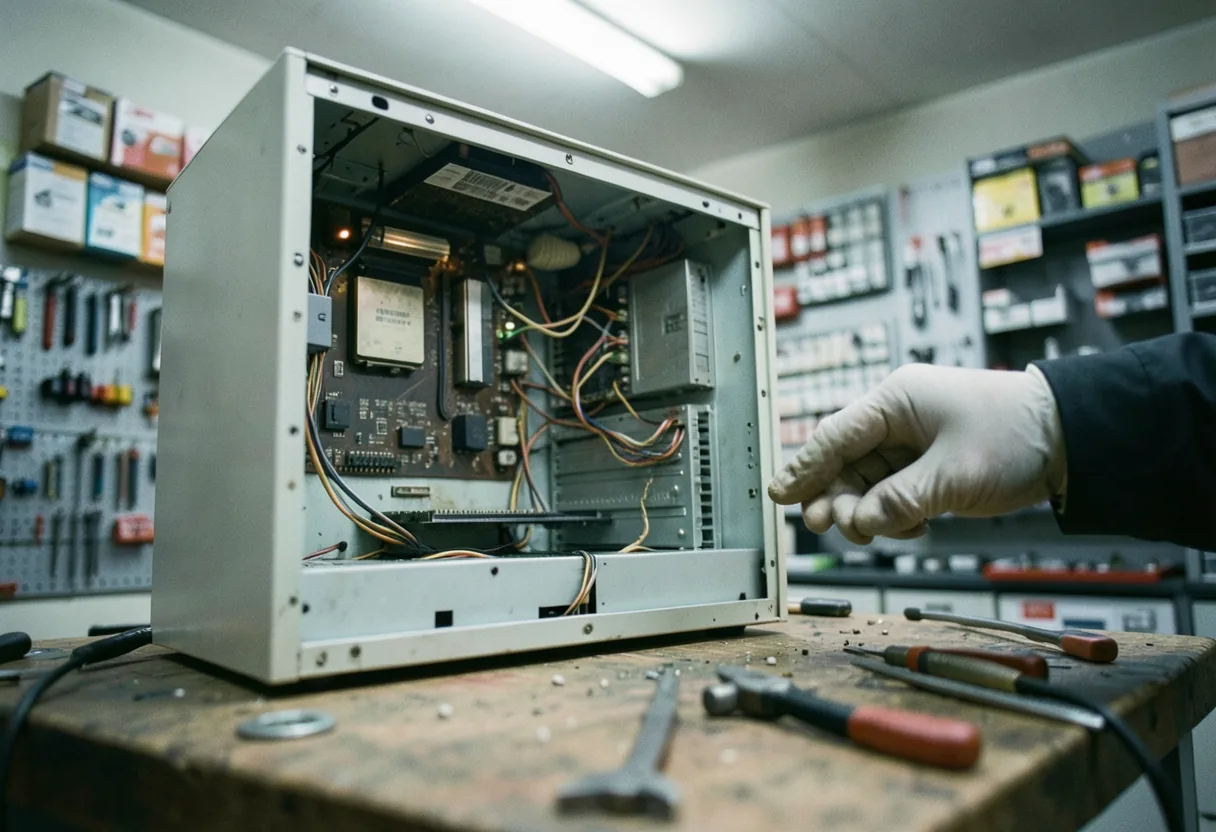
What is the difference between program counter and PCB?
The program counter and the Process Control Block (PCB) serve different roles in computing, with the former managing instruction flow and the latter overseeing process management.
A program counter holds the address of the next instruction to be executed within the CPU as a hardware register. In contrast, the PCB is a data structure used by the operating system to manage processes, containing information such as process state, CPU registers, and memory management details. For example, when a process is switched out of the CPU, the program counter’s value is saved in the PCB to resume execution later. According to operating system principles, the PCB ensures that the state of each process is preserved during context switching, which is vital for multitasking environments.
While the program counter operates at the instruction level, the PCB manages processes at a higher level, coordinating multiple tasks and ensuring efficient CPU utilization. Recognizing these distinctions is key to mastering computer architecture, as both elements contribute to the overall performance and reliability of computing systems. For insights into how these concepts extend to AI applications, visit the link.
Does every computer have a program counter?
Yes, every von Neumann and Harvard architecture-based computer has a program counter, as it is essential for sequential instruction execution.
In von Neumann architecture, which combines program and data memory, the program counter is crucial for fetching instructions sequentially. Similarly, in Harvard architecture, which separates program and data memory, the program counter still plays a vital role in instruction management. For example, the Intel 8085 microprocessor, a classic example of von Neumann architecture, relies on its 16-bit program counter to keep track of the next instruction’s memory address. According to CPU design principles, the program counter is a fundamental component in both architectures, ensuring that instructions are executed in the correct order.
Most general-purpose computing systems include a program counter as a standard feature, although some specialized architectures or parallel processing systems employ different mechanisms for instruction management. Its role in maintaining instruction flow is indispensable, making it a universal element in computer design. For a deeper understanding of related topics, consider graph-computing.
Program counter register
The program counter register, a hardware component within the CPU, stores the memory address of the next instruction to be executed.
The CPU architecture determines whether a program counter register is typically a 16-bit or 32-bit register. For instance, in the Intel 8085 microprocessor, the program counter is a 16-bit register that can address up to 64KB of memory. The program counter register is automatically incremented by the size of one instruction after each fetch cycle, ensuring that the CPU moves to the next instruction in sequence. According to CPU design documentation, the program counter register can also be manually updated using jump instructions, allowing for conditional and unconditional branches in program execution.
A critical component in managing the flow of instructions, the program counter register enables the CPU to execute programs in the correct order. Its role in instruction management is fundamental to the operation of any computing system, making it a key element in computer architecture. For further exploration of related concepts, check out our guide on Message-Oriented Middleware in Data Transmission. The program counter register’s ability to manage instruction flow is essential for the efficient execution of programs, ensuring that each instruction is processed in the correct sequence.
Program counter circuit
The program counter register is managed by an electronic circuit within the CPU known as a program counter circuit.
The program counter circuit typically includes a counter, a multiplexer, and control logic to handle the incrementing and updating of the program counter register. For example, in the Intel 8085 microprocessor, the program counter circuit includes a 16-bit counter that is incremented by one after each instruction fetch. The multiplexer selects between the incremented value and a new address provided by a jump instruction, allowing for conditional and unconditional branches. According to CPU design principles, the program counter circuit is essential for managing the flow of instructions, ensuring that the CPU executes programs in the correct order.
A program counter circuit plays a crucial role in the overall performance of the CPU, as it directly impacts the speed and efficiency of instruction execution. Its design and implementation are critical to the operation of any computing system, making it a key element in computer architecture. For a deeper understanding of related topics, explore Convolutional Neural Networks in Modern Physics. The program counter circuit’s ability to manage instruction flow is essential for the efficient execution of programs, ensuring that each instruction is processed in the correct sequence.
Program counter example
An example of a program counter in action can be seen in the Intel 8085 microprocessor, where it plays a crucial role in instruction execution.
In the Intel 8085 microprocessor, the program counter is a 16-bit register that stores the memory address of the next instruction to be executed. For instance, if the program counter currently holds the value 0x1000, it will fetch the instruction stored at that address and then increment the program counter to 0x1001 for the next instruction. According to Intel’s documentation, the program counter can be updated using jump instructions, allowing for conditional and unconditional branches in program execution. This capability is essential for implementing loops and decision-making structures in programs.
Managing instruction flow is fundamental to the operation of the Intel 8085 microprocessor, as the program counter ensures that instructions are executed in the correct order. Its design and implementation are critical to the overall performance of the CPU, making it a key element in computer architecture. For further exploration of related concepts, check out our guide on Intelligence in AI: From Theory to Beta Applications. The program counter’s ability to manage instruction flow is essential for the efficient execution of programs, ensuring that each instruction is processed in the correct sequence.
Program counter in 8085
Program counter in Intel 8085 microprocessor is a 16-bit register storing memory address of next instruction to be executed.
Managing the flow of instructions, the program counter in the Intel 8085 is essential for ensuring that the CPU executes programs in the correct order. For example, if the program counter currently holds the value 0x1000, it will fetch the instruction stored at that address and then increment the program counter to 0x1001 for the next instruction. According to Intel’s documentation, the program counter can be updated using jump instructions, allowing for conditional and unconditional branches in program execution. This capability is essential for implementing loops and decision-making structures in programs.
Ensures instructions are executed in the correct order, the program counter plays a fundamental role in the operation of the Intel 8085 microprocessor. Its design and implementation are critical to the overall performance of the CPU, making it a key element in computer architecture. For a deeper understanding of related topics, explore Graph Computing for Particle Simulation Models. The program counter’s ability to manage instruction flow is essential for the efficient execution of programs, ensuring that each instruction is processed in the correct sequence.
Program counter in computer
The program counter, a register in computers, stores the address of the next instruction for the CPU to execute.
The program counter plays a vital role in managing instruction flow during program execution. For example, in the Intel 8085 microprocessor, the program counter is a 16-bit register that can address up to 64KB of memory. The program counter is automatically incremented by the size of one instruction after each fetch cycle, ensuring that the CPU moves to the next instruction in sequence. According to CPU design principles, the program counter can also be manually updated using jump instructions, allowing for conditional and unconditional branches in program execution.
Program counter ensures instructions are executed in the correct order, playing a fundamental role in any computing system’s operation. Its design and implementation are critical to the overall performance of the CPU, making it a key element in computer architecture. For further exploration of related concepts, check out our guide on Message-Oriented Middleware in Data Transmission. The program counter’s ability to manage instruction flow is essential for the efficient execution of programs, ensuring that each instruction is processed in the correct sequence.
Program counter diagram
The structure and function of the program counter within the CPU are illustrated by a program counter diagram.
Program counter diagrams usually display a register that holds the memory address of the next instruction for execution. For example, in the Intel 8085 microprocessor, the program counter diagram would depict a 16-bit register that can address up to 64KB of memory. The diagram would also show the incrementing mechanism, which automatically increases the program counter by the size of one instruction after each fetch cycle. According to CPU design documentation, the program counter diagram would also include the multiplexer and control logic that handle the updating of the program counter using jump instructions.
A valuable tool for grasping the role of the program counter in managing instruction flow is the program counter diagram. It provides a visual representation of the program counter’s structure and function, making it easier to comprehend its importance in computer architecture. For a deeper grasp of related topics, explore. Convolutional Neural Networks in Modern Physics. The program counter diagram’s ability to illustrate the program counter’s role in managing instruction flow is essential for the efficient execution of programs, ensuring that each instruction is processed in the correct sequence.
Program counter in OS
The CPU manages a program counter in an operating system (OS), which is vital for process scheduling and context switching.
In an operating system, the program counter is used to keep track of the current instruction being executed by a process. When the OS switches from one process to another, it saves the program counter’s value for the current process and loads the program counter’s value for the next process. For example, in a multitasking environment, the OS uses the program counter to manage the execution of multiple processes, ensuring that each process gets a fair share of CPU time. According to operating system principles, the program counter is a critical component in process management, enabling efficient multitasking and resource allocation.
Process management relies heavily on the program counter to ensure processes are executed in the correct order, a role fundamental to any operating system’s operation. Its design and implementation are critical to the overall performance of the OS, making it a key element in computer architecture. For further exploration of related concepts, check out our guide on Intelligence in AI: From Theory to Beta Applications. The program counter’s ability to manage process execution is essential for the efficient operation of the OS, ensuring that each process is processed in the correct sequence.
Program counter in Computer Architecture
In computer architecture, a register holds the address of the next instruction for the CPU to execute.
The program counter manages instruction flow during program execution, making it a critical component. For example, in the Intel 8085 microprocessor, the program counter is a 16-bit register that can address up to 64KB of memory. The program counter is automatically incremented by the size of one instruction after each fetch cycle, ensuring that the CPU moves to the next instruction in sequence. According to CPU design principles, the program counter can also be manually updated using jump instructions, allowing for conditional and unconditional branches in program execution.
A program counter manages instruction flow and ensures instructions are executed in the correct order, playing a fundamental role in any computing system’s operation. Its design and implementation are critical to the overall performance of the CPU, making it a key element in computer architecture. For a deeper understanding of related topics, explore Graph Computing for Particle Simulation Models. The program counter’s ability to manage instruction flow is essential for the efficient execution of programs, ensuring that each instruction is processed in the correct sequence.
Hardware implementation
Instruction flow in the hardware implementation of the program counter is managed by a register, counter, and control logic.
Registers implement the program counter, typically storing the memory address of the next instruction to be executed. For example, in the Intel 8085 microprocessor, the program counter is a 16-bit register that can address up to 64KB of memory. The counter increments the program counter by the size of one instruction after each fetch cycle, ensuring that the CPU moves to the next instruction in sequence. According to CPU design documentation, the control logic includes a multiplexer that selects between the incremented value and a new address provided by a jump instruction, allowing for conditional and unconditional branches in program execution.
A program counter’s hardware implementation is critical to the overall performance of the CPU, as it directly impacts the speed and efficiency of instruction execution. Its design and implementation are key elements in computer architecture, ensuring that instructions are executed in the correct order. For further exploration of related concepts, check out our guide on Message-Oriented Middleware in Data Transmission. The program counter’s hardware implementation is essential for the efficient execution of programs, ensuring that each instruction is processed in the correct sequence.
Consequences in machine architecture
In machine architecture, a program counter facilitates efficient instruction management, supports branching, and handles loops and conditional structures.
Program counter ensures instructions execute in the correct order, playing a fundamental role in computing systems. For example, in the Intel 8085 microprocessor, the program counter’s ability to increment and update allows for the efficient execution of sequential instructions. According to CPU design principles, the program counter’s support for branching and conditional structures is essential for implementing complex programs. This capability enables the CPU to make decisions and repeat instructions, which are fundamental to the operation of any computing system.
Program counter plays a significant role in machine architecture, influencing the performance and reliability of computing systems. Its design and implementation are critical to the operation of any CPU, making it a key element in computer architecture. For a deeper understanding of related topics, explore Convolutional Neural Networks in Modern Physics. The program counter’s ability to manage instruction flow is essential for the efficient execution of programs, ensuring that each instruction is processed in the correct sequence.
Consequences in high-level programming
Consequences of program counters in high-level programming include the ability to implement loops, conditional statements, and functions.
Program counter ensures instructions execute in the correct order, playing a fundamental role in any computing system’s operation. For example, in high-level programming languages like C++ and Java, the program counter’s ability to handle branching and conditional structures is essential for implementing complex programs. According to programming principles, the program counter’s support for loops and functions enables developers to write efficient and reusable code. This capability is crucial for the development of large-scale applications, as it allows for the organization and management of code in a structured manner.
Counters play a significant role in high-level programming, impacting the efficiency and reliability of software development. Its design and implementation are critical to the operation of any CPU, making it a key element in computer architecture. For further exploration of related concepts, check out our guide on Intelligence in AI: From Theory to Beta Applications. The program counter’s ability to manage instruction flow is essential for the efficient execution of programs, ensuring that each instruction is processed in the correct sequence.
Practical takeaway
Knowing the program counter is key to comprehending how CPUs control instruction flow, guaranteeing effective and dependable program execution. Using its features, developers and architects can create systems that tackle intricate tasks effortlessly.
What does it mean to be beta?
Being beta typically refers to a personality type characterized by traits like being more passive, cooperative, and less dominant. In social dynamics, betas are often seen as team players who prefer collaboration over leadership.
What is beta β?
Beta (β) can refer to several things depending on context. In statistics, it's a regression coefficient. In finance, it measures a stock's volatility compared to the market. In biology, it can denote a variant of a protein or virus.
What is a beta as a person?
An introverted, analytical individual who prefers to follow rather than lead is typically a beta person. They are often detail-oriented and value harmony in social settings.
What is an alpha vs a beta?
Alphas are typically dominant, assertive, and natural leaders, while betas are more passive, cooperative, and prefer supporting roles. Alphas tend to take charge, whereas betas focus on teamwork and consensus.